In 20 words or fewer
Technical writing is creating documents that help someone install, deploy, configure or use a product or a service.
In 50 words or fewer
Technical writing is creating documents that help someone install, deploy, configure or use a product or a service. It results in the creation of things such as user manuals, admin guides, instruction booklets and help systems, but not of business proposals, white papers, case studies, and so on.
In 100 words or fewer
Technical writing is creating documents that help someone install, deploy, configure or use a product or a service. It results in the creation of things such as user manuals, admin guides, instruction booklets and help systems, but not of business proposals, white papers, case studies, and so on. However, the distinction between technical writing deliverables and general business deliverables is getting increasingly blurred. These days, technical writers are also called upon to create or edit marketing collaterals, press releases, internal training tutorials, computer-based training material, and so on.

Friday, August 15, 2008


The Covering Letter
I had already been working for more than 10 years when, in 2006, I switched to the technical writing field. The first job was fairly easy to find - I looked up the vacancies, found a few that I liked the look of, got a call for an interview, and got onboarded  It was a fun, learning experience at that company. Two years later, I thought it was time for me to change jobs. That shouldn’t be too difficult, I told myself, since I am now “experienced”. Two months later, I realised that though I was getting responses to my applications, they were not really from companies that I was dying to work for. The “hey-I’d-love-this-job” vacancies that I had applied to weren’t generating responses. I gave a long and hard look at my résumé (though this blog post is not about that). I also gave a long and hard look at my covering letter. My English teacher in school had taught me that all non-letters (CVs, forms, cheques and drafts, etc.) MUST be accompanied by a covering letter, so my standard practice thus far had been something on the lines of:
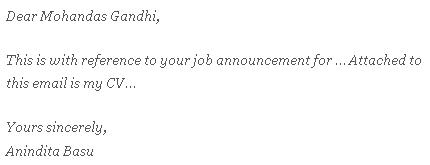
It was a fun, learning experience at that company. Two years later, I thought it was time for me to change jobs. That shouldn’t be too difficult, I told myself, since I am now “experienced”. Two months later, I realised that though I was getting responses to my applications, they were not really from companies that I was dying to work for. The “hey-I’d-love-this-job” vacancies that I had applied to weren’t generating responses. I gave a long and hard look at my résumé (though this blog post is not about that). I also gave a long and hard look at my covering letter. My English teacher in school had taught me that all non-letters (CVs, forms, cheques and drafts, etc.) MUST be accompanied by a covering letter, so my standard practice thus far had been something on the lines of:So, I re-read this letter critically. “Yew”, I told myself. “Hiring managers of “hot companies” must be getting tons of these. What can I do to make my covering letter interesting enough to make them click that link that takes them to my actual résumé?”
I thought awhile and came up with a different covering letter. This is what I want to share with all of you in this blog post of mine. The covering letter that I finally sent out got me three interview calls within the space of an hour, and all of them from three “good” companies. I am at one of them today . This is what my edited covering letter looked like.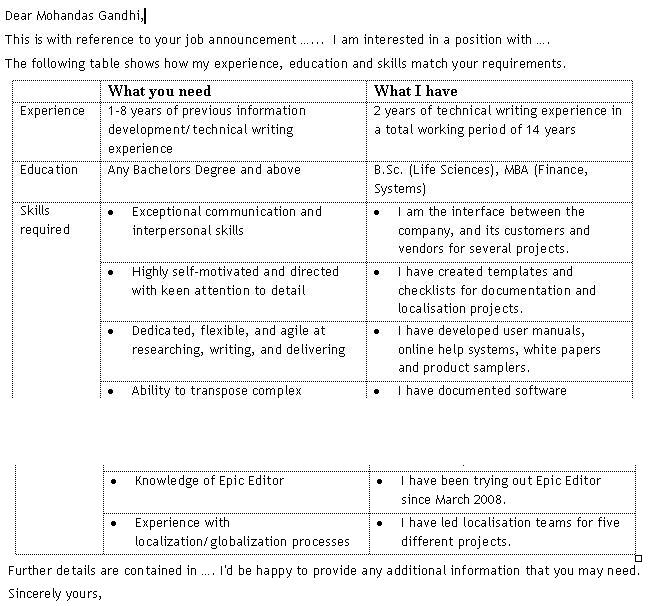
It may be a totally unconventional manner of doing things but I realise that it made me stand out from the crowd and still get taken seriously.
Subscribe to:
Posts (Atom)